

Eternal Sunshine of the Spotless Mind
 Two people hit a wall in their romantic relationship. But medical science offers a rather painless way out. Simply remove all memories of the other person. For her it works. But for him it is much more difficult to let go. This is an interesting film for a number of reasons: It takes you until to end to figure out what is real within the fiction. Second, Jim Carrey for once does not overdo his acting. Kate Winslet gives a fantastic performance as an impulsive red-haired bubble head. And most appealingly, it portrays life-together and love in a nuanced way.
The Prince & Me
 It is a regular fairy tale, but there a few clever twists. The writers located most of the action in Wisconsin. A playboy Daenisch prince discovers a farm girl who does not like dating because it could interfere with her going to medical school. She turns him into an responsible adult and is invited to live the life of a princess in Danmark. I don’t recommend this film but if you happen to be stuck in an airplane and you like romance movies, I can report that the film has a few good lines.
Last Tango in Paris
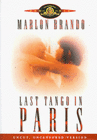 Even good acting (Marlon Brando) cannot save a script that has no depth and a director who lacks an eye for how to pick stories that are worth telling. If one is confused in one’s head (as writer or director), it does not make for good art to let confusion take over the story. The film likes to come off as being intellectual, but it’s creators lack intellect. Five out of the 130 minutes are truly moving: Roughly two thirds into the movie, Marlon Brando sits in front of the coffin of his dead-by-suicide wife and shows off his genius as an actor. From then on the film is again terrible. The film end’s with the line, “He is a madman.” Ostensibly, Marlon Brando’s character is meant, but one wonder’s about how much grip on reality both the writer and director of this film had themselves. Insight is what is terribly missing here.
Wealth and Happiness
SHARON BEGLEY has filed this interesting report about the connection between wealth and happiness in today’s WSJ. It seems like justice is valued highly all over the world. But what is less clear is what people are willing to pay for it.
Wealth and Happiness Don’t Necessarily Go Hand in Hand
On a scale of 1 to 7, where 1 means “not at all satisfied with my life” and 7 means “completely satisfied,” it’s no surprise that survey-respondents who make Forbes magazine’s list of the 400 richest Americans average 5.8, while homeless pavement dwellers in Calcutta average 2.9.
All in all, sleeping on sidewalks and starving can’t hold a candle to sleeping on satin and splurging.
Not so fast. In the surveys, taken off and on over the last 20 years, the Inuit people of frigid northern Greenland also average 5.8. So do the cattle-herding Masai of Kenya, who live in dung huts with no electricity or running water. And Calcutta’s slum dwellers, for whom being only a single economic rung above the pavement denizens apparently makes a huge difference, come in at 4.6.
Does money buy happiness? In particular, does raising a nation’s income or wealth, as measured by gross domestic product, raise the population’s overall level of happiness? Intuitively, you’d think the answer is a definite yes. After all, classic economic theory holds that additional income allows people to meet additional needs, and the more needs—or even wants—you satisfy, the happier you are. Also, money buys choices. With $10 you can buy steak or hot dogs, but with only $1 you better hope you have relish in the fridge. The more choices people have, economists assume, the happier they are.
Continue ReadingThe Day After Tomorrow
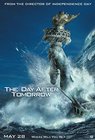 The Oscar winning Titanic was boring compared to this remarkable motion picture by Roland Emmerich. America as we know it coming to an end is simply a bigger issue than two lovers going bathing because their vessel hit an iceberg. The notion that New York City could turn tomorrow into Iceland is scientifically wrong; but evidence that global warming is taking place with possible huge consequences for the world
Tonio Kroeger
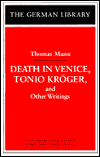 This autobiographical short piece of fiction is the best writing of Thomas Mann that I have laid eyes on. For me it was much more compelling than his famous first major novel The Buddenbrocks. At least one German writer (Martin Walser) claims to have learned the entire novella by heart so that he could readily draw upon it as a role model for his own writing. I suspect there are many more. I have just reread Tonio Kroeger and once again found that Thomas Mann’s ability to describe human emotions is breathtaking.
Till Death Do Us Part, or Whatever
Given that most people seem to know that the divorce rate in contemporary America is about 50 percent for first timers (the odds for 2nd and 3rd marriages are even worse), I was curious whether some people would feel a little bit queezy about uttering the promise Till Death Do us Part. SAM ROBERTS in today’s New York Times reports that a few couples indeed try inject a bit realism in their marriage vows.
THE Rev. Calvin O. Butts III, pastor of Harlem’s Abyssinian
Baptist Church, was stunned recently when three couples who
wanted him to preside at their weddings asked if he would
alter the traditional marriage vows. Forget the
till-death-do-us-part injunction, they suggested. Instead,
would he mind substituting a more realistic escape clause,
say, “as long as our love shall last”?
Dr. Butts did mind. His advice: Find another minister.
Continue Reading
Big Fish
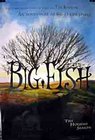 A son struggles to find his father behind that endless stories and myths that junior heard from the day he was born. As an adult the son feels he does not know who his father really is because the stories are often so unbelievable to the adult mind. When the father comes down with cancer, the son starts to investigate whether the life of his father is all built on lies. The film is driven by incredible imagination and exquisite storytelling.
Confession of a Murderer
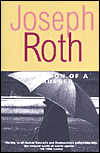 Joseph Roth died in his Paris exile, leaving behind thirteen novels as well as many stories and essays. The Confession of a Murderer Told in One Night is after Job Roth’s most spellbinding novel that I have read to date. Roth had to flee from the Nazis in Germany. The book is a wonderful parable of the spirit that fuelled the Nazi movement without ever saying one word about it. The story, in fact, takes place in Russia and Paris.

© 2026 Peter Murmann. Powered by ExpressionEngine.
